The Way of the Oolong
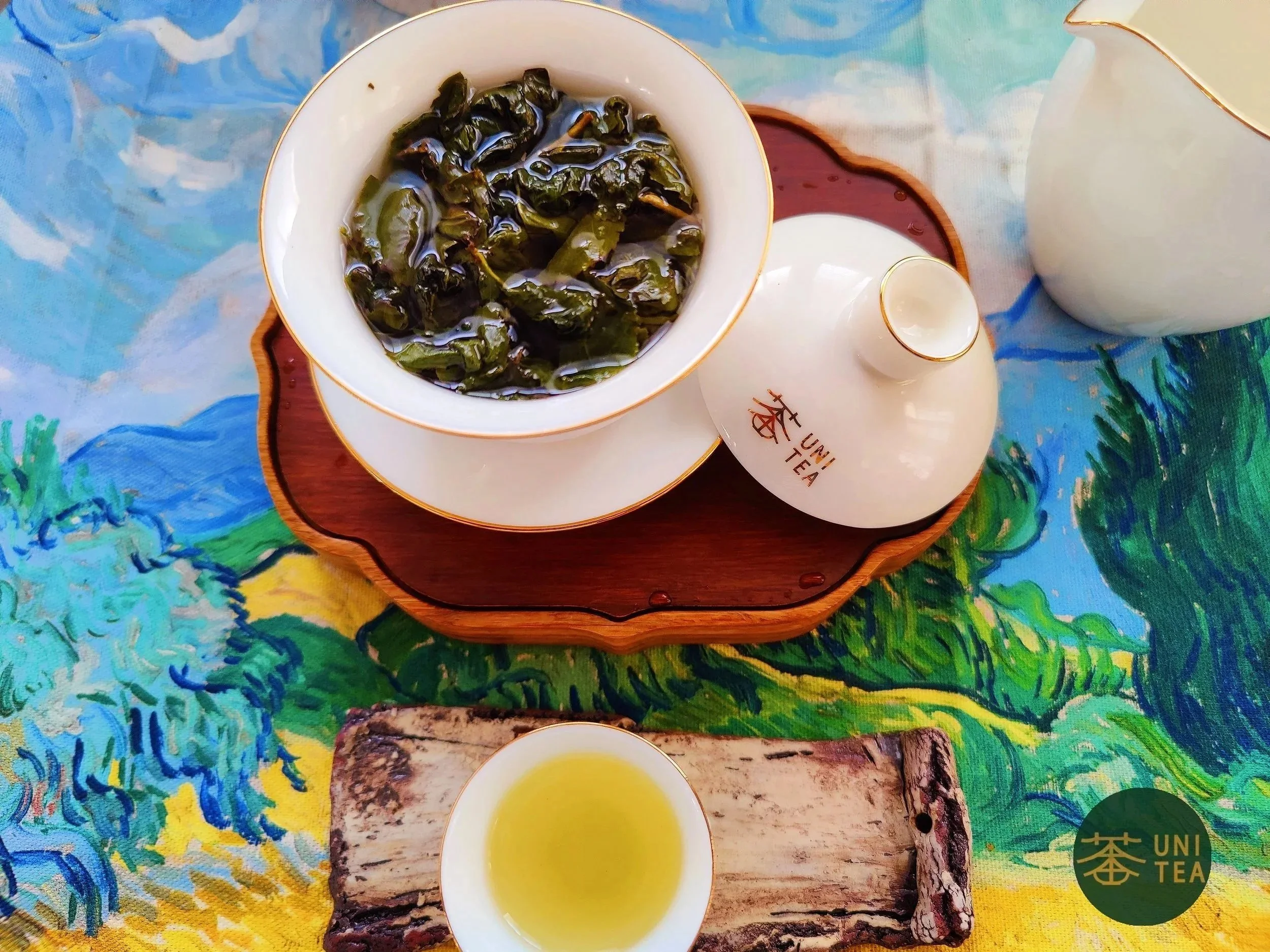
“The deepest wisdom is not a choice between extremes, but the practice of holding them both in view - and then, steadily, steeping in the middle path, just as the oolong does.”
Some leaves are plucked green, preserved in their verdant youth: light, bright, grassy, full of spring. They become green tea with crisp declarations, untouched by sun withering or pan firing. They speak of beginnings. Others are left to surrender to time, to oxidize fully until their green gives way to russet and earth. They become black tea with robust flavours, steady warmth. They speak of endings.
But there is another way - A middle way. The in-between. The way of the oolong.
The oolong is the leaf that lingers in the threshold. It is neither rushed to the kettle nor abandoned to the sun. It is withered, gently bruised, just enough for its edges to blush, for the first whispers of depth to awaken, before the fire halts the transformation. It is a leaf caught in a beautiful, deliberate hesitation. A partial oxidation. It holds the high, floral notes of mountain peaks and the honeyed warmth of the valleys below. It is neither one nor the other. It is the conversation between them. This is not indecision. This is wisdom. This is the art of the in-between.
We are often taught to choose: to be this or that. To plant our flag atop certainty or sink into the loam of absolute conviction. The middle, we are told, is compromise, a weak, watery space for the unsure. Oolong tells a different story. The middle is not dilution. It is integration. It is the spacious place where opposites meet, soften, and complex beauty is born.
How to be like an oolong:
1. Allow the Gentle Bruise.
To become oolong, the leaf must be shaken, tumbled. Controlled disruption awakens it. In life, this is welcoming gentle friction without letting it shatter us. Let the experiences, opinions, and challenges that brush against our core be the tender oxidation of our spirit. A heart never bruised is forever green: potent, but single-note.
2. Know When to Apply the Fire.
Transformation is not endless. At the right moment, when fragrance deepens, but before the green is lost, the heat is applied. This is discernment. Knowing when to stop turning a thought over, when to act, when to say “enough.” It is the quiet hand that preserves our essence before we become something we are not.
3. Carry Both Notes.
Sip a good oolong: first, the lift of orchid, the cool whisper of a high mountain; then, the smooth, creamy stone-fruit warmth lingering in our throat. It does not choose. Neither should we. Hold sorrow and gratitude, ambition and peace, softness in strength, strength in gentleness. The truth is rarely at the poles. It lives in the “and.”
4. Understand That Multiple Infusions Are the Point.
Green tea offers one bright steep. Black tea, one or two deep ones. A great oolong reveals itself over many pourings: first light, aromatic; then fuller, richer; later, balanced and profound. The middle path is not a single revelation, but evolving wisdom. We are a leaf that yields more depth the longer we steep.
The world will often ask us to choose a side: hot or cold, hard or soft, yes or no. Remember the oolong. The leaf that embraces nuance, partial transformation, the glorious in-between. In that spacious middle, the most resilient, layered, and interesting flavours emerge. Steep our life that way. Let ourself be shaken, not shattered. Know when to stop fermenting our thoughts. Hold contradictions kindly. Reveal our depth not in one shout, but in a series of quiet, deepening infusions.
Oolong is a quiet teacher: the middle way is not the path of least resistance; it is the path of most flavour. It does not deny green tea or black tea. It simply embodies what is possible when partial transformation is welcomed. When we allow ourself to be both structured and fluid, passionate and calm, certain and curious.
When our thoughts harden into absolutes, pause and ask:
Is there an “and” here?
Is there a third note: a warmth beneath sharpness, a clarity within softness?
Am I seeing only before or after, and missing the oxidation in between?
The middle path is not lukewarm. It is whole. It is not about avoiding stance. It is about holding one that breathes, grows, and deepens over time.
Thank you, oolong. A reminder steeped again and again, for all of us.
Do you sometimes slip into thinking in stark contrasts, overlooking the nuanced middle where understanding often rests?